Modifications to Vera – already!
MOD #1 – Up-Plating
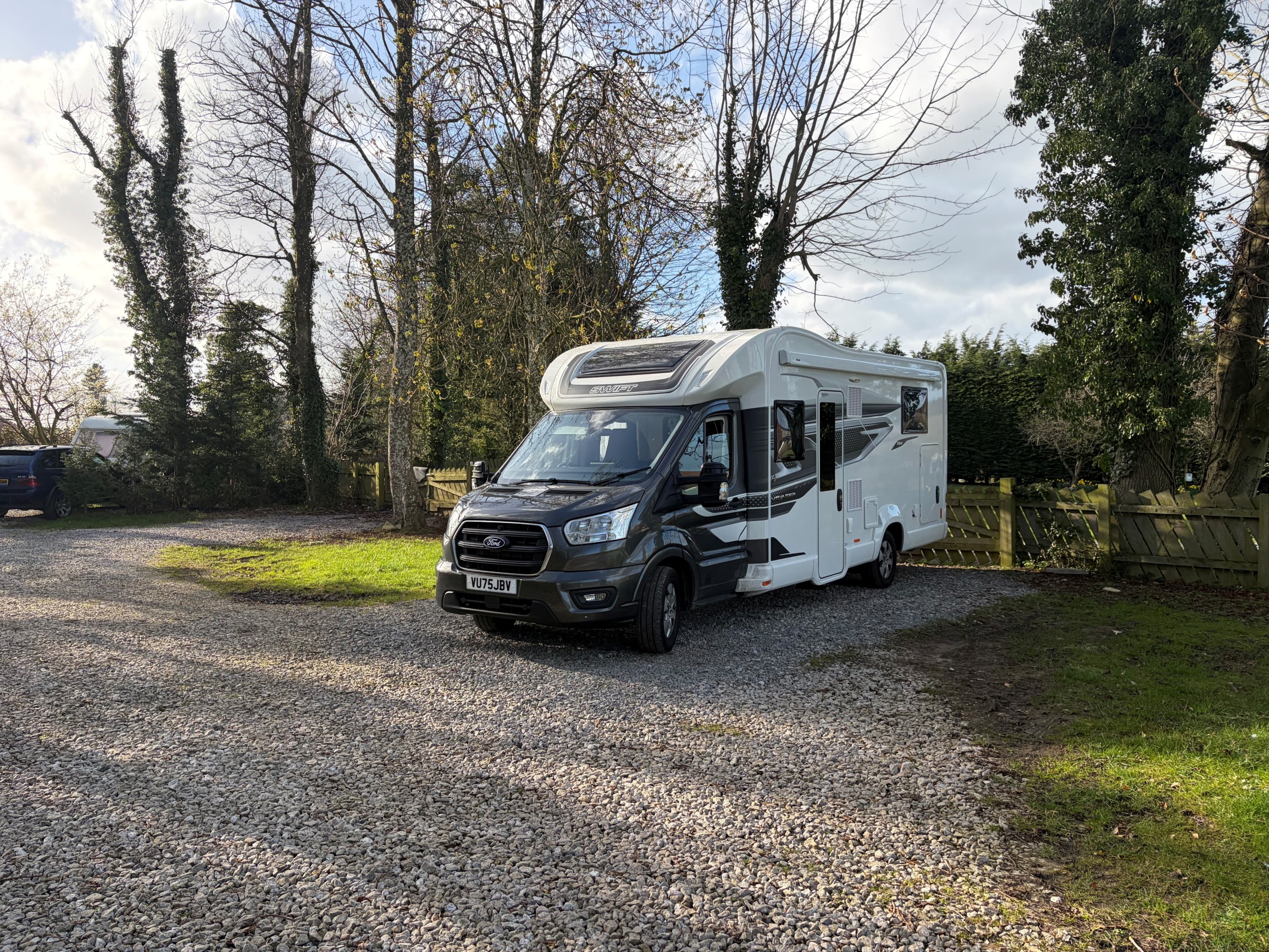
Whilst Vera – our Swift Voyager 594 is practically perfect in every way, there were just a couple of things that we wanted to change. The weight was the first. Motorhome weights are a bit complicated and are referred to by initials. The crucial one is the MTPLM – aka the Maximum Technically Permitted Laden Mass (of course!). This is the absolute max that the van can weigh fully laden – so includes driver, passenger, dogs, crockery cutlery, TV, awning microwave, fuel, waste tanks and everything else you would normally take away for a stay in your pride and joy.
The next important weight is the MIRO – the Mass in Running Order. This is the weight that the manufacturer declares that van will weigh when it leaves the factory and includes all standard equipment (e.g the batteries) a 75Kg (under 12 Stones) driver, engine coolants, 90% full fuel tank, and a 6kg gas cylinder – nothing else. Vera’s MIRO is 3132. You subtract the MIRO from the MTPLM to arrive at the next important weight, known as the payload. The payload is basically everything else you need – a heavier driver, a passenger, 2 dogs and all the gear you have put in the van to enable living aboard. Vera’s Payload is 368kg – which seems a lot but is actually not a great deal to play with. We’ve already added a roll-out awning, TV and bracket and microwave. Add in me, the dogs, some camping chairs, a barbecue and our bikes and it becomes almost unworkable.
The reason many vans are kept at 3500kg is that most people can drive them on a standard licence. Anything over this weight cannot be driven by anyone who passed their driving test after Jan 1 1997 unless they have a “C1” licence. You can read more about this topic here
We decided that we would need to “Uprate” (or up-plate) Vera. Essentially, we wanted to add another 500kgs to our MTPLM to give us a bigger payload. Luckily, in this case, it is just a paper exercise and does not require any further modifications to the vehicle. Anything over 4000kgs would have involved uprating the suspension and/or the tyres.
Vera was up-rated by a company called SvTech, who make the process extremely painless and are very responsive. Once they have done their bit, they send you all the stuff you need to make it legal. This involves sending off the V5 to DVLA to ratify the changes and affixing a new VIN plate to the van. Job done. We were very impressed with the service, which cost just under £350, and Vera is now classified as a “Private HGV”.
The positives of up-plating are increased payload (hence peace of mind) and lower VED (Car Tax) costs. We reckon our refund will probably cover half the cost of up-plating this year, and we’ll continue to save money every year.
The downsides are increased costs for tolls, maybe ferries and a lower speed at which we can drive – but tonking along at 70 is not really our style in Vera, so we are happy with this.
The importance of knowing how heavy your motorhome is, cannot be stressed enough. If you are stopped and found to be overweight, there are fines and you will be asked to remove items from your vehicle before you can continue your journey. There are also fines of up to £300 for individual axles being over the permitted max weight.
Mod #2 – Self-levelling System
We had noticed that self-levelling systems seem to be a very popular upgrade to your motorhome. They also came highly recommended by a very dear friend.
There are a number of reasons why they are a good idea. As ex-caravanners we know that pitches aren’t always level and always carried ramps to help level the van. There’s nothing worse than sleeping on a slope. But you also have the jockey wheel on a caravan to help with front to back levelling. The ramps were mainly used for side to side levelling. And they are a pain. With a motorhome all levelling is usually done with ramps and we have watched folk spend ages getting the trim of their van to their satisfaction. And it’s not only sleeping on an angle – it’s ensuring that the shower tray empties properly, and not cooking on a slant.
Self-levelling systems actually do more than just level your van automatically – they also
- add stability
- enable a tyre change without a jack
- help empty your tanks
- act as additional security because, when down, they make the van impossible to drive away
- weigh your motorhome, more or less removing the need to visit a weighbridge and enabling you to keep a close eye on your loading
So how do they work? Well, most systems use hydraulic rams, controlled by a gyroscope, to lift the vehicle and level it.
After much research, we chose a fairly new-to- the British market leveller from a German company called SHR, which is controlled by an App on your phone.
We sought advice from the very knowledgeable and helpful Leighton at TMD motorhomes, who are just off the M42 (J3), south pf Birmingham. We paid our deposit and booked a fitting appointment. Regrettably, due to the Ford recall debacle, we had to cancel that appointment and by then they’d had an influx of appointments and could not fit us in until 23rd March. Annoying but could not be helped.
We also popped to the Caravan and Motorhome Show and saw a live demo of the system, which confirmed that we had made a pretty good choice. The engineering impressed our resident engineer, who pronounced it well designed and well built.
In preparation for fitting, we had to weigh the van, so off we trundled to our friendly local weigh-bridge, at the quarry just outside Brinklow village, to pop Vera on the scales.
We needed 3 measurements
- whole van (without passengers)
- front axle
- rear axle
We also requested a weigh with all of us (including the dogs).to give us an idea of how we were doing in terms of weight, now that most of our kit is on board. It came to almost exactly 3500kgs, so it looks like we were right to up-plate!
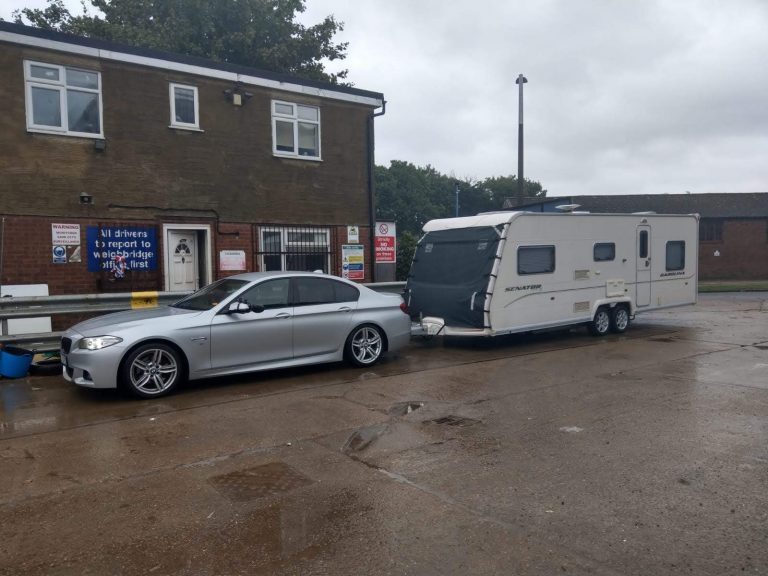
It was an interesting trip and a new experience for all of us. And it cost us the princely sum of £8! Bargain. Stupidly, I omitted to take any photos. Tsk. But here is another very similar public weigh bridge.
We had to drop Vera off on Monday morning and pick her up, bristling with her new kit on Wednesday. At least – that was the plan. And the drop-off went smoothly and then we just had to wait until Wednesday. Wednesday came and they rang to say that they’d hit a snag and it would not be ready until Thursday. Annoying – but what could we do?
I was hoping to use Thursday to pack all our stuff, in a leisurely manner, ready for our trip away on Friday. but it would have to be squished into whatever time was available to us. They promised to ring Thursday morning.
Thursday morning came and the news was not good. We had asked to pick up at lunchtime and they were saying they might need to keep it until close of play. We pushed back quite hard and they said they’d keep us posted. Luckily we got a call at around 12:30 to say they’d resolved the snagging issue and we could pick up as planned. Phew. We drove over, got a quick demo and off we went.
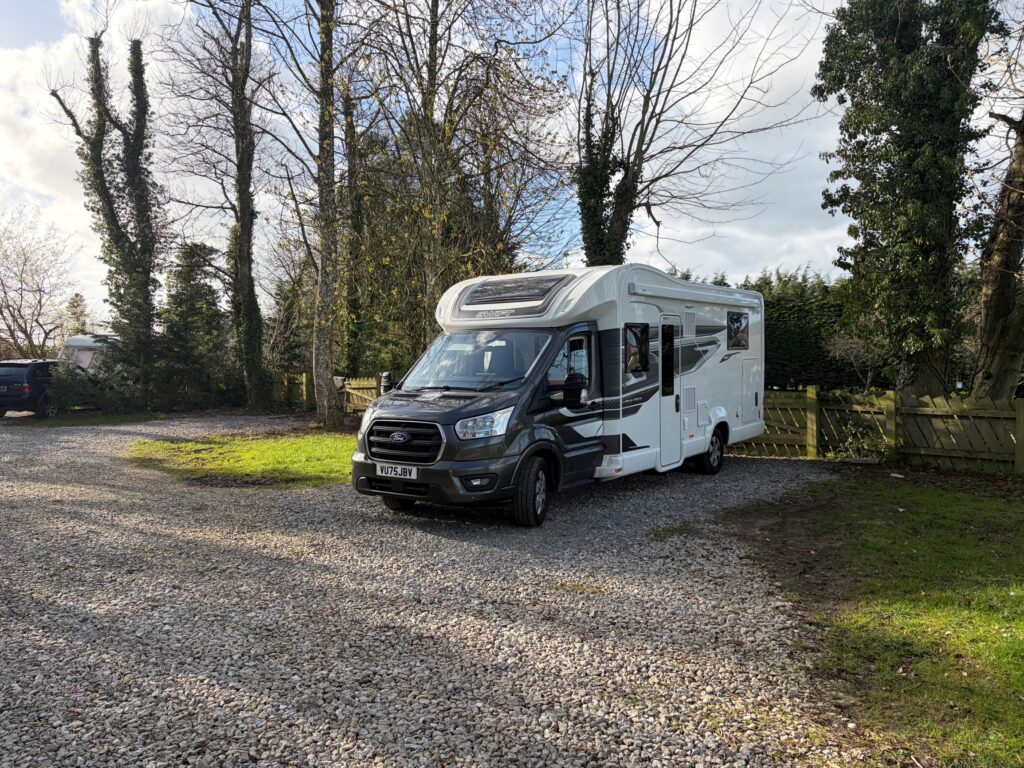
We deployed it on our first night stop in Catterick and I was pretty impressed. I would never have guessed that we were so far off true, had I not seen it with my own eyes. The pictures below show before and after leveling and illustrate what the system does very well.
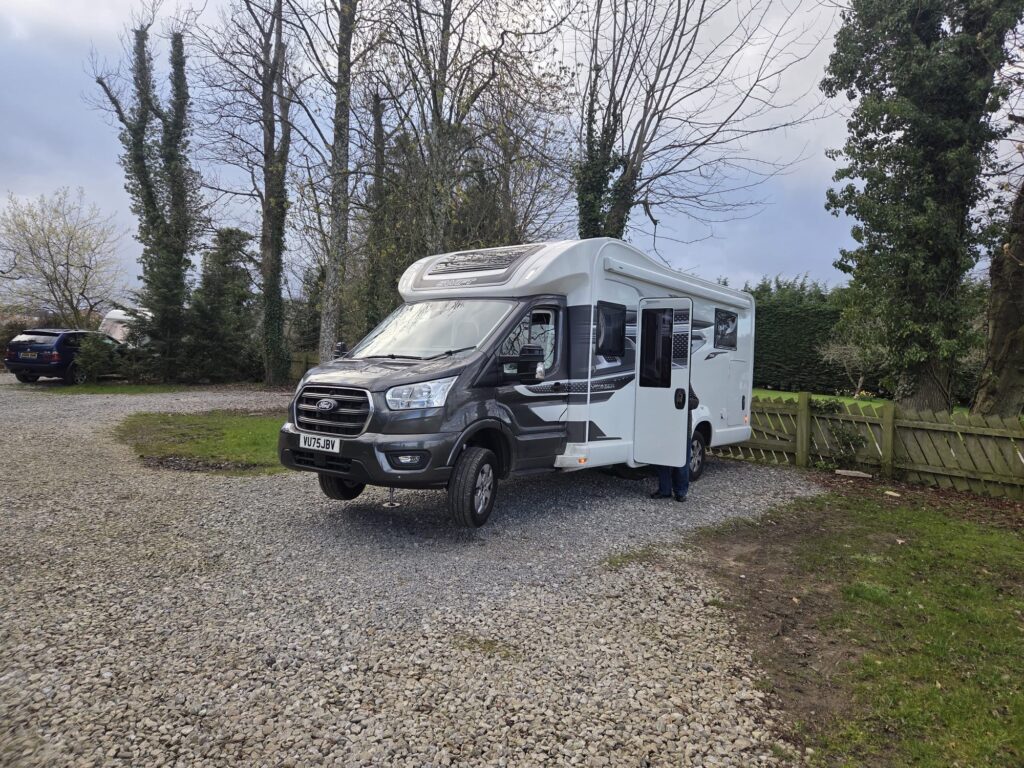
We are off to Scotland for a short break to see friends and family. We are expecting quite a lot of weather, given the time year.!
One Reply to “We are the Mods!”